
OMMA Inspection Checklist for Dispensaries
Prepare confidently for your next OMMA inspection with a practical checklist for dispensaries. Learn what to review, common gaps to fix, and how to stay inspection-ready.
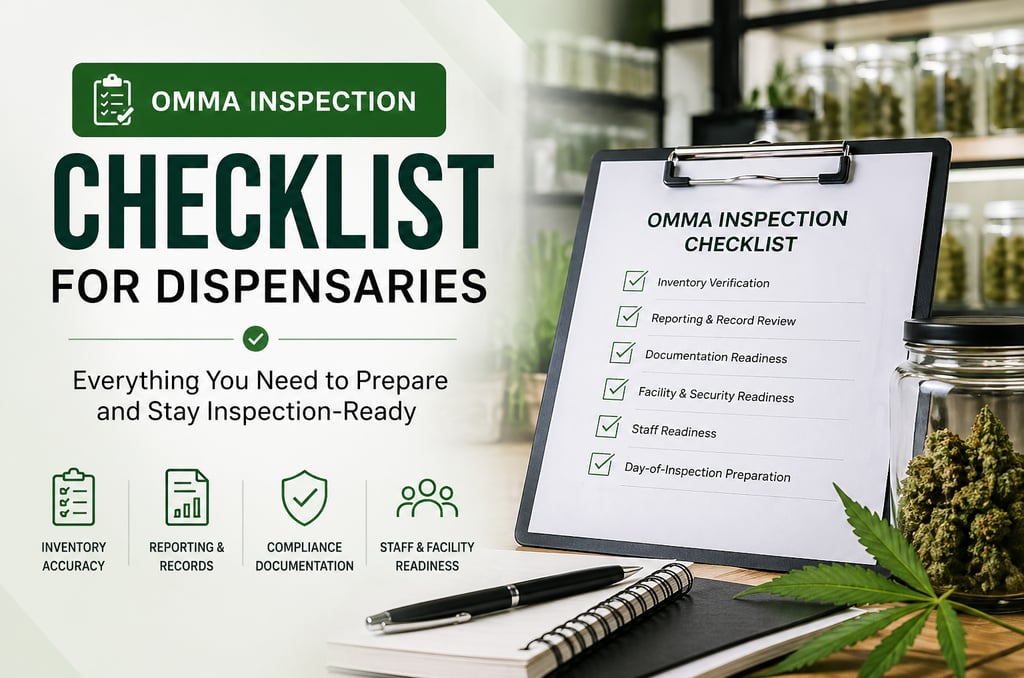
It makes sense for dispensaries to perform regular compliance checks. However, in practice, most dispensaries focus on daily operations and only review records closely when an inspection is expected.
This is normal.
Preparation usually starts when something prompts it, whether an inspection notice, license renewal period, inventory issue, or a discrepancy. At that point, the team will have to start examining the documents to see if everything is complete and accurate.
Rushed preparation brings stress and can lead to missing small details. Many operators rely on a simple OMMA inspection checklist to make sure records, inventory, and documentation are ready before inspectors arrive. If you want to understand the full inspection process, read our guide on what happens during an OMMA inspection.
Table of Content
Conclusion
Situations That Usually Trigger Inspection Preparation
The majority of dispensary facilities are not engaged in checking their inventory on a regular basis. The main reasons why most establishments start inspecting before a possible problem arise are as follows:
Receiving inspection notice
Preparation for license renewal
Inventory discrepancies discovery
Addressing complaints or incidents
Change of inventory/point-of-sale system
Compliance audit preparation
Cases like this put pressure on the quick verification of records. Having a checklist ready is useful to avoid last minute confusion.
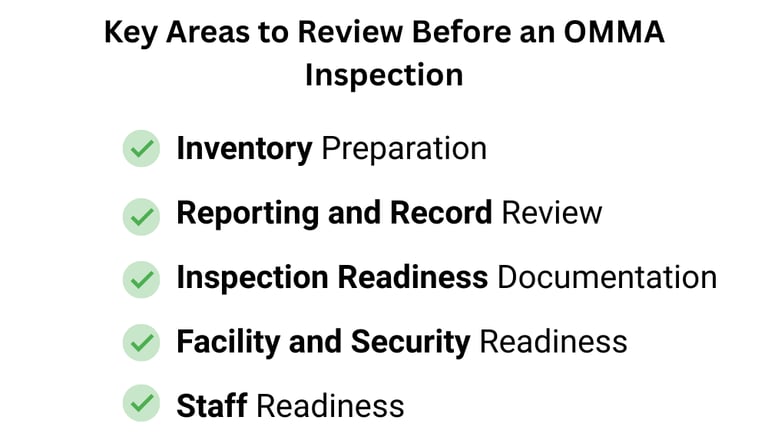
Inventory Verification Checklist Before an Inspection
Accuracy of inventory is among the first things that inspectors check. Errors in the physical and written number of goods can lead to more questions or further investigations.
Here is a list that will help to prepare the inventory record checks.
Inventory preparation checklist
Physical inventory counts match recorded quantities
All packages have the appropriate status
Transfers are documented and performed
Inventory adjustments have explanations
Expired or damaged products have been removed
Returned goods are reported properly
Records on waste management are complete
These steps will help detect possible issues before the inspection.
Reporting and Record Review Checklist
Correct reports are required for an inspector to understand that all is well with the transactions and the inventory operations. These same reporting practices are also important when preparing for a Metrc inspection.
The following list will help organize your records for a good impression.
Reporting preparation checklist
Correct transactions are registered
Updates on inventory are recorded in the system
Transfers are reported properly
Adjustments have explanations
Inbound transactions are properly reported
Reporting mistakes were fixed
Having all the information will make the inspection easier and more efficient.
Inspection Readiness Documentation Checklist
Inspectors typically request documentation early in the process. Unorganized documentation can result in delays and increased inspections.
Documentation preparation checklist
Sales documents are available and organized
Invoices are available
Transfer documents are up-to-date
Licenses are current
Training documentation is completed
Incident reports have been made
Compliance documentation is kept up-to-date
Preparation of documentation will assist in avoiding delays in inspections.
Facility and Security Readiness Checklist
The physical security and facility condition are another aspect of being ready for an inspection. This checklist will assist in ensuring you meet regulatory standards.
Facility readiness checklist
Surveillance equipment is functional
Camera coverage is sufficient
Video footage requirements are met
Restricted areas are secure
Storage labeling is correct
Alarms are operating
Access records are up-to-date
Facility checking prevents unnecessary compliance concerns.
Staff Readiness Checklist
It is necessary that employees understand how to respond during an inspection. This would facilitate smooth communication between different departments.
Staff Readiness Checklist
Employees know which staff members will coordinate with inspectors.
Employees are familiar with record-keeping procedures.
Access rights correspond to job descriptions.
Documentation of training is updated.
Responsibilities concerning compliance have been delegated.
Employees are aware of emergency procedures.
Ready staff makes inspection easier.
Avoid last-minute inspection stress
Use tools that help keep inventory, reports, and documentation organized before inspectors arrive.
Day-of-Inspection Quick Checklist
During an inspection, preparation is preferred over speed. The following checklist ensures that everything goes according to plan.
Assign one employee as the main point of contact for inspectors.
Inspectors can access records that have been requested.
Confirm the accuracy of inventory quantities.
Ensure that access to the system is available.
Documentation is sorted and ready.
Maintain professional communication throughout the process.
Such a checklist eliminates confusion and potential delays.
Frequently asked questions
When should dispensaries prepare for an OMMA inspection?
The process of preparing for an OMMA inspection should be started once you receive an official notice that your dispensary will be inspected, or when you're getting close to renewing your permit or auditing your dispensary. Usually, the last minute preparations can lead to stress and errors, especially if it comes to small details.
What should dispensaries do if they find errors while preparing for an inspection?
If discrepancies or missing records are discovered, the first step is to investigate the cause and document the correction. Many issues can be resolved before the inspection if they are identified early. Keeping clear records of adjustments and corrective actions helps demonstrate responsible compliance management.
Which documents must be prepared for an inspection?
To prepare for an OMMA inspection, it's important to make sure you have all relevant documents ready. Common examples of those include sales records, purchase invoices, transfer manifests, employee licenses, and training documentation.
Who should handle inspections preparation at dispensaries?
A lot of dispensaries appoint a specific manager who is going to deal with the whole inspection process. The person should take care of organizing your documents and checking your inventory. aving a clearly designated contact helps prevent confusion and keeps preparation tasks organized.
How Software Helps Dispensaries Stay Inspection-Ready
Manual workflows make inspection preparation harder than it needs to be. Managing inventory, verifying information, and producing reports from different software programs raises the possibility of human error.
However, cannabis dispensary management software can streamline this process. Many operators use dedicated cannabis compliance software to keep records organized and reduce last-minute preparation stress.
For instance, most dispensaries use software solutions that:
Offer real-time inventory tracking
Create well-organized audit logs
Automatically produce compliance reports
Identify inconsistencies in data
Ensure easy access to documents
Know Where You Stand Before Inspectors Arrive
A structured compliance review can help confirm that your records, inventory, and documentation are ready
Check Out Our Recent Blog Posts
© 2026. All rights reserved.
Metrc-native cannabis software for OMMA-licensed operators. Built in Oklahoma, built for compliance.